A useful food scale makes common portions and recipes easier to repeat. It does not make a food label exact, fix an unreliable database entry, or require you to weigh every bite.
Published by Builderfox LLCManufacturer specifications reviewed; no hands-on testingNot yet medically reviewed
What "top" means here
Five useful workflows, not a universal ranking
The shortlist covers a simple two-button scale, a pull-out display for large bowls, higher batch capacity with wall power, app-assisted nutrient logging, and separate platforms for large and small ingredients. Selection used manufacturer documentation, not Amazon ratings, prices, commission rates, or marketplace review text.
Buy lessIf your current scale reliably tares, reads in grams, and fits your usual bowl, keep it.
Prioritize frictionFor most home calorie tracking, one-gram increments, a stable platform, a readable display, and a tare button are more useful than a large feature list.
What a food scale improves in real life
Repeatable portions
Grams reduce the ambiguity of how tightly a food was packed into a cup or spoon, especially for calorie-dense foods.
Recipe logging
Tare lets you add ingredients to one bowl and record each mass. A finished recipe still needs a total yield or serving-weight step.
Consistent cooking
Weight can make a repeat recipe easier to reproduce, but labels, databases, moisture loss, and cooking yield still introduce uncertainty.
A display that shows one gram does not prove one gram of absolute accuracy. Maximum capacity includes the bowl, auto-off can interrupt a slow recipe, and large cookware can hide a screen. Cleaning, storage, battery access, and app dependence often matter more than another displayed decimal.
Five options by practical use case
As an Amazon Associate I earn from qualifying purchases. Builderfox LLC may receive a commission if you buy through a paid Amazon link on this page, at no additional cost to you. Product inclusion is not based on commission.
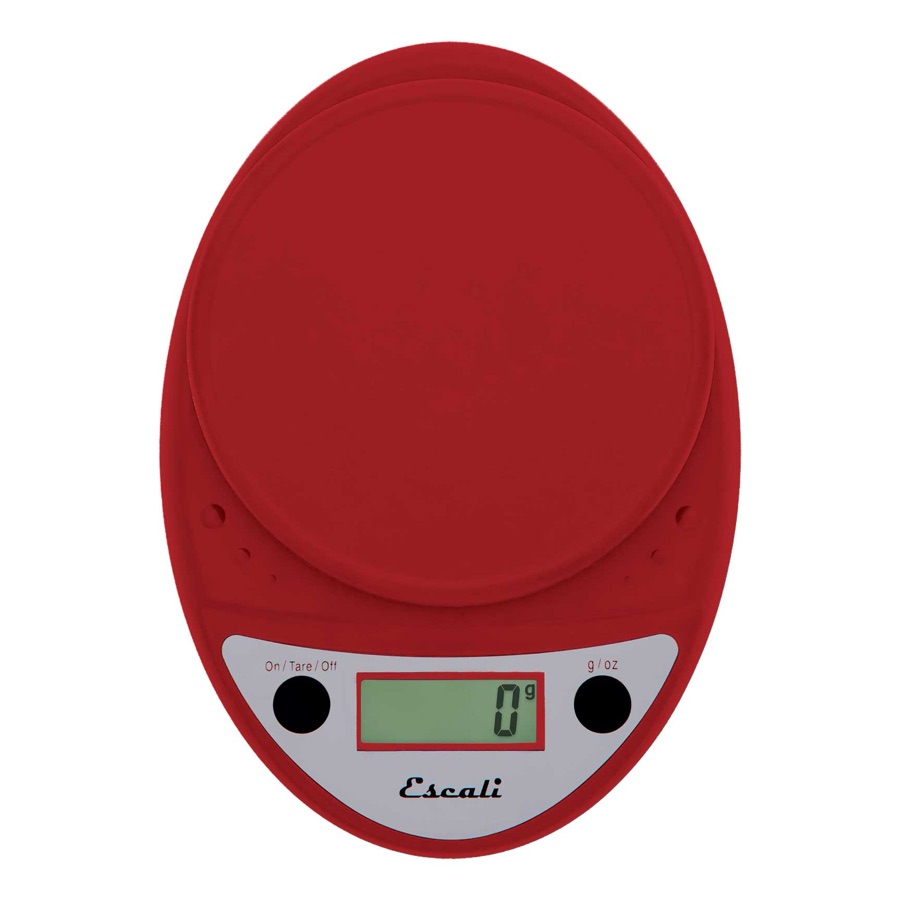
Escali presents the Primo as a lightweight, approachable scale with an 11 lb capacity, a tare function, and a large display. It is the straightforward choice here for someone who wants to weigh common portions without pairing an app.
Limit: a large bowl can obscure a display positioned close to the platform, and a basic interface does not store a food log.
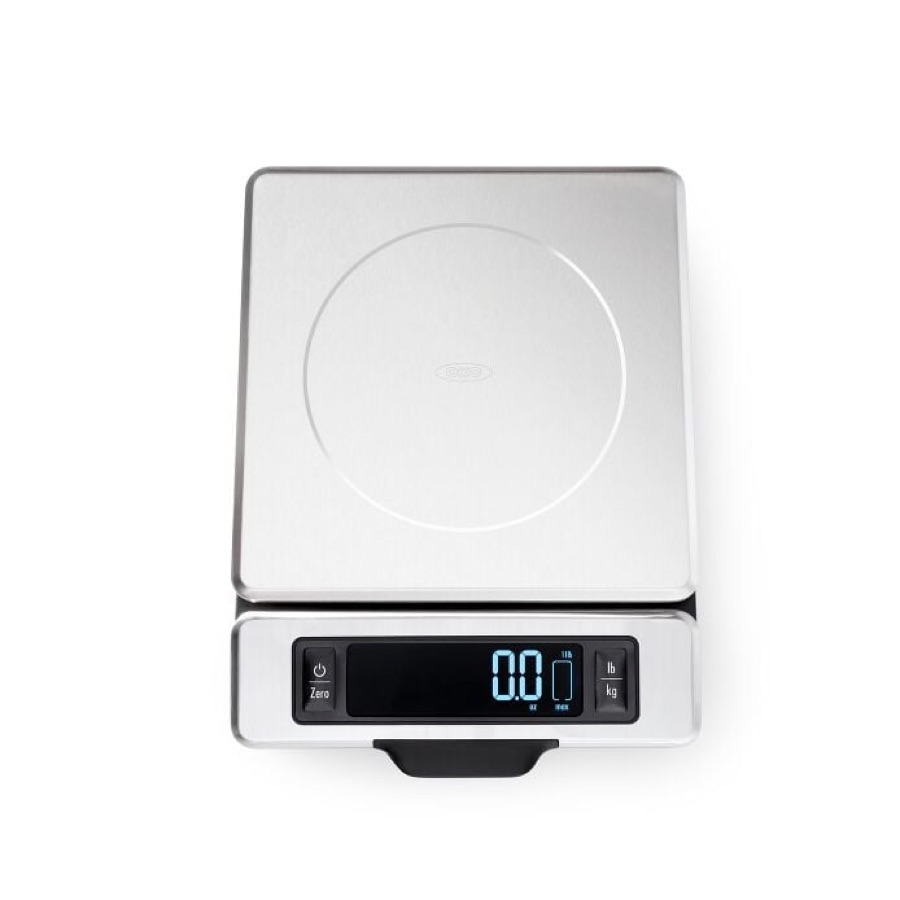
OXO lists a pull-out display intended to avoid shadowing from large plates or bowls, plus tare, unit conversion, an 11 lb capacity, and 1 g increments. That display design is the reason it is included.
Limit: the pull-out mechanism and larger footprint add complexity that is unnecessary when your usual bowl already leaves the screen visible.
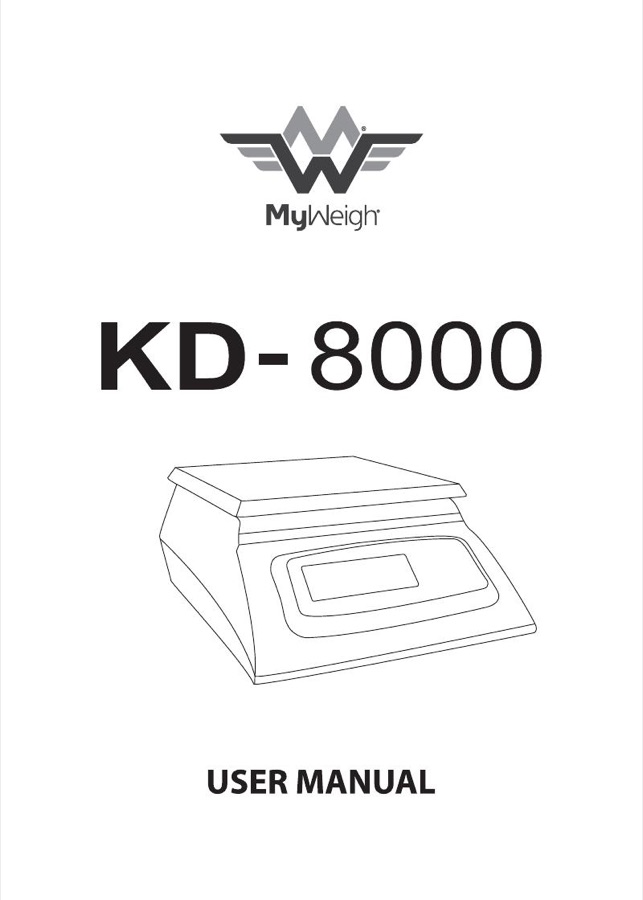
The manufacturer manual lists an 8000 g capacity in 1 g increments and operation from either batteries or the included AC adapter. It fits larger recipe batches or a countertop setup where frequent battery replacement is undesirable.
Limit: it is a larger, more specialized scale than most portion-tracking routines need, and overloading can permanently damage it.
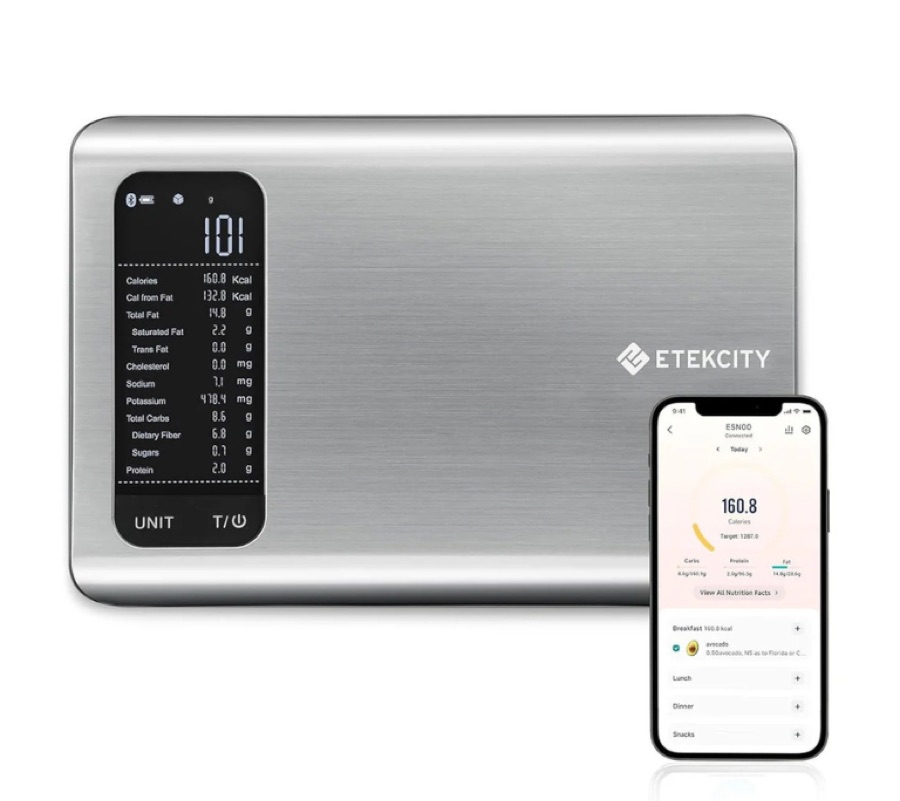
Etekcity lists VeSync app support, Nutritionix food data, custom food entries, 19 tracked nutrients, tare, an 11 lb capacity, and 1 g increments. It can reduce manual arithmetic for someone who already wants that app workflow.
Limit: a scale cannot verify that the selected database entry matches the food in front of you. App setup, syncing, and food-selection errors can add rather than remove friction.
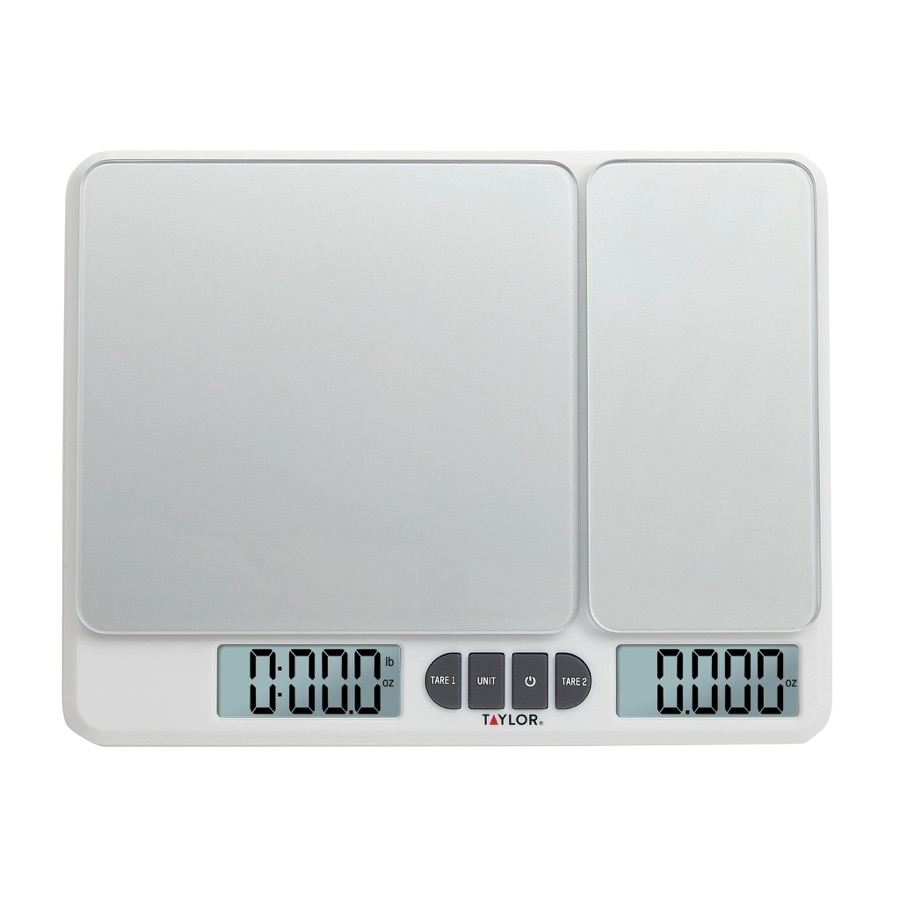
Taylor lists two tempered-glass platforms with independent tare controls: one for an 11 lb large-batch workflow and another for finer ingredient tasks. It is the distinct fit for someone who regularly alternates between full bowls and small baking ingredients.
Limit: two platforms take more counter space and add cost and cleaning surfaces. Ordinary calorie tracking rarely needs this setup.
Set the scale on a hard, level surface and use grams for common food portions.
Place the container first, then press tare before adding food.
For recipes, record each ingredient and weigh the finished edible yield.
Use the same food entry and cooked-or-raw convention each time.
Skip weighing when the extra precision will not change a useful decision.
Consistency is the goal, not perfect surveillance. If detailed food weighing increases anxiety, rigidity, or compulsive behavior, stop and seek individualized support when appropriate.
Selection and safety limits
This is an editorial use-case shortlist, not an accuracy certification or a claim that these are Amazon's highest-rated or best-selling food scales. Confirm current capacity, dimensions, care instructions, app compatibility, and warranty with the manufacturer.
Kitchen scales are not substitutes for laboratory or medical equipment. Do not use a general food scale to measure medication or any dose where an error could cause harm.
Creation note: Builderfox LLC compared manufacturer-published features against the stated workflows on August 25, 2026. No product was purchased or hands-on tested for this guide. No Amazon rating, review text, price, or availability data was used. Read the affiliate disclosure and editorial policy.